1990s

Видео-обложка

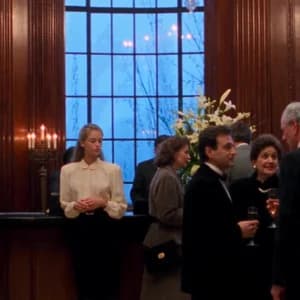
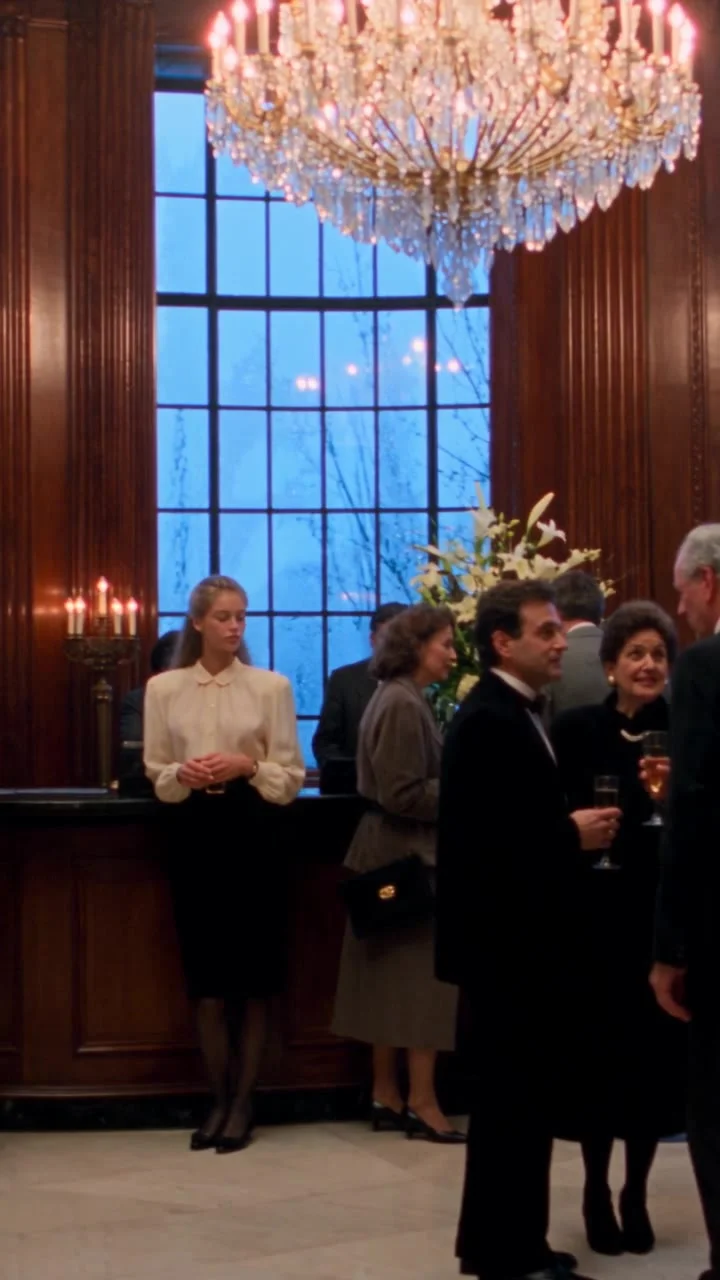
MANDATORY STYLE LOCK: Match the supplied reference video’s visual language as closely as possible. The result must look like the same fictional film, photographed by the same cinematographer, using the same 35mm film stock, vintage lenses, diffusion filter, lighting approach, exposure, color timing and early-1990s telecine process. Authentic expensive American romantic drama produced between 1988 and 1993. Warm golden tungsten interiors, cool blue evening windows, deep reddish mahogany, creamy natural skin tones, soft focus falloff, low-contrast highlights, lifted blacks, visible fine organic grain, delicate halation, subtle gate weave, slight chromatic softness and occasional focus imperfection. Preserve the reference’s restrained acting, slow physical dolly movement, intimate 85mm close-ups and elegant classical editing. This must not look like a modern production imitating the 1990s. It must appear genuinely photographed and transferred during that period. Do not improve, digitally clean, sharpen, modernize or beautify the image. Create an exactly 20-second vertical 9:16 romantic mystery sequence that looks like an authentic scene from an expensive American feature film produced between 1988 and 1993. STORY During an elegant winter reception inside a luxurious Manhattan hotel, a young woman accidentally receives the wrong overcoat at the cloakroom. Inside its pocket she discovers an old brass key tied with a narrow red silk ribbon. A mysterious young man across the lobby recognizes the key and follows her toward a golden elevator. When the doors are about to close, he stops them with his hand. The woman understands that the key belongs to him, but instead of returning it immediately, she presses the button for the highest floor. He enters, and the golden doors close behind them. Use completely original fictional characters. Do not imitate recognizable real actors. FORMAT Exactly 20 seconds. Vertical 9:16. 24 frames per second. Multi-shot cinematic sequence. Approximately ten short shots. Classic restrained editing. No dialogue. No subtitles. No modern objects. Frame the video like a careful vertical crop from an original 4:3 television film master. Keep characters and important actions near the centre. Do not use modern social-media composition. AUTHENTIC PERIOD FILM LOOK The result must resemble genuine American romantic cinema filmed around 1988–1993 and transferred from 35mm film to an early television master. Shot on 35mm Eastman Kodak 500T motion-picture film with vintage spherical cinema lenses and a subtle diffusion filter. Visual characteristics: fine organic film grain, soft but recognizable facial detail, warm creamy skin tones, slightly faded colors, gentle golden halation, soft bloom around lamps and reflections, moderately lifted blacks, subtle shadow noise, slight chromatic softness, minor gate weave, occasional tiny dust particles, delicate motion blur, imperfect but natural focus pulls, restrained contrast, soft film-to-telecine texture. Warm amber interior light contrasts with cool blue winter light outside the windows. The image must not look digitally clean, modern, glossy, oversharpened or HDR. This is a genuine period movie frame, not a modern video with a retro filter. CHARACTERS WOMAN: An original fictional woman approximately 27 years old with long natural dark-brown hair, soft period volume, expressive eyes, realistic skin texture and understated late-1980s makeup. She wears an ivory silk blouse with a softly gathered collar, high-waisted black knee-length pencil skirt, thin black belt, semi-sheer dark tights, low black leather pumps, pearl earrings and a slim vintage wristwatch. She carries a heavy charcoal-gray wool overcoat. Preserve exactly the same face, hair, body proportions, clothes and accessories throughout every shot. Her acting is subtle: natural breathing, blinking, restrained eye movement and small changes in expression. MAN: An original fictional man approximately 30 years old, tall and lean, with naturally wavy dark hair and realistic masculine facial features. He wears a charcoal double-breasted suit, open-collar white cotton shirt, black leather shoes and a dark wool overcoat. Preserve his exact face, hair, clothing and body proportions throughout the sequence. His behaviour is confident but restrained. ENVIRONMENT A luxurious late-1980s Manhattan hotel during a formal winter reception: dark mahogany panels, cream marble floors, gold wall sconces, crystal chandeliers, heavy curtains, tall windows overlooking a softly blurred nighttime skyline, wooden cloakroom counter, waiters carrying silver trays, adult guests wearing historically accurate evening clothes, polished golden elevator with mirrored brass walls. No smartphones, modern screens, LEDs or contemporary objects. TIMELINE 0.00–2.00 — RECEPTION Slow lateral dolly across the elegant reception. Adult guests converse quietly beneath crystal chandeliers. A waiter carrying champagne glasses passes through the soft-focus foreground. Reveal the woman standing at the cloakroom counter. Warm lamps illuminate her face while cool winter light enters through the window behind her. 2.00–4.00 — WRONG COAT Medium shot. An elderly female cloakroom attendant hands the woman a charcoal-gray wool overcoat. The woman accepts it without realizing it is not hers. The coat has believable weight. Her fingers grip the collar correctly, and the fabric folds naturally over her arm. A passing guest briefly covers the frame and motivates the next cut. 4.00–6.00 — THE KEY Close-up of the woman placing one hand inside the overcoat pocket. She removes an old brass key tied with a narrow deep-red silk ribbon. Macro details: aged brass, tiny scratches, soft golden reflections, visible woven silk fibers, stable fingers, natural fingernails, realistic jewellery. The key is completely physical and ordinary. No magical glow. 6.00–8.00 — HE NOTICES Cut to the mysterious man standing across the lobby beside a tall window. Use a gentle rack focus from another guest in the foreground to the man’s face. He notices the key. His eyes move toward it first, followed by a restrained turn of his head. His expression changes subtly from politeness to recognition. Cool blue window light outlines his suit. Warm chandelier light touches one side of his face. 8.00–10.00 — TOWARD THE ELEVATOR Tracking shot behind the woman walking toward the golden elevator. Her blouse, skirt, hair and heavy overcoat move naturally. Her shoes maintain believable contact with the marble floor. The man follows several metres behind her. He never runs or behaves aggressively. 10.00–12.00 — ELEVATOR Symmetrical frontal shot. The elevator bell rings. Golden doors open and reveal a warm mirrored brass interior illuminated by several small ceiling lamps. The woman enters and turns toward the doors while holding the key. Her reflection corresponds exactly to her movement and body position. The doors begin closing. 12.00–14.00 — HE STOPS THE DOORS As the doors nearly meet, the man’s hand enters the gap and gently stops them. The doors reopen mechanically. His hand remains anatomically correct and outside the seam. The doors never pass through his fingers. The woman looks at him with restrained surprise and curiosity. 14.00–16.50 — RECOGNITION Intimate alternating close-ups. The man looks at the brass key and then into the woman’s eyes. She follows his gaze, realizes that the key belongs to him and looks back at his face. Use vintage 85mm portrait-lens framing, shallow depth of field, warm golden reflections and gentle focus transitions. No exaggerated smiles. The romantic tension is communicated through eye contact, breathing and a barely perceptible change in expression. 16.50–18.00 — HER DECISION Medium two-shot inside the elevator. Instead of returning the key, the woman presses the highest button on the elevator panel. One small amber button illuminates. No number or text needs to be readable. The man steps inside. She still holds the brass key and red ribbon. They briefly see each other through the mirrored reflection. 18.00–20.00 — FINAL SHOT Static exterior view of the golden elevator. The doors close slowly while the woman and man face each other inside. They maintain eye contact through the narrowing gap. The brass key and red ribbon remain visible in her hand until the doors close completely. Warm chandelier reflections move naturally across the polished golden doors. Hold on the closed doors for the final half-second. End without a title card. CAMERA LANGUAGE Use classic late-1980s and early-1990s cinematic grammar: slow physical dolly movement, restrained medium shots, soft foreground obstructions, gentle rack focus, eye-line matching, intimate 85mm close-ups, symmetrical elevator compositions, motivated cuts based on movement. Camera movement must feel heavy and physical, produced with a real dolly and tripod. No gimbal orbit, drone, aggressive zoom, speed ramp or smartphone movement. Use approximately: 40mm lens for the reception, 50mm for medium shots, 85mm for facial close-ups, 100mm macro for the key. MOVEMENT AND PHYSICS Natural walking cycles, breathing and blinking. Realistic fabric weight, hair movement, footsteps and object interaction. The coat, key and ribbon remain physically attached to the woman’s hands. Elevator doors, reflections and lighting behave consistently. SOUND DESIGN No spoken dialogue. Use: quiet indistinct reception ambience, champagne glasses, footsteps on marble, fabric rustle, small metallic key sound, elevator bell, mechanical elevator doors. Music: restrained late-1980s romantic film score with soft piano, warm analog synthesizer, quiet strings and a subtle saxophone texture. No modern beat or trailer sound. CONTINUITY The woman carries the same charcoal coat and the same brass key with the same red ribbon in every relevant shot. The man and woman preserve their exact identities. Maintain consistent hotel geography, winter evening, background architecture and lighting direction. ABSOLUTE PRIORITIES 1. Exactly 20 seconds. 2. Genuine 1988–1993 American film appearance. 3. Authentic 35mm film-to-telecine texture. 4. No modern digital cleanliness. 5. Stable original character identities. 6. Subtle romantic acting. 7. Warm golden interior and cool blue windows. 8. Physically correct coat, key, doors and reflections. 9. Historically accurate fashion and environment. 10. No dialogue or written text. NEGATIVE No modern fashion, smartphones, contemporary screens, LEDs, modern architecture, influencer poses or social-media aesthetics. No HDR, razor-sharp digital image, excessive clarity, glossy advertising look, perfect stabilization, orange-and-teal grading or artificial bokeh. No plastic skin, waxy faces, aggressive retouching, identity drift, face morphing, changing clothes or changing hairstyles. No deformed hands, extra fingers, floating key, changing key, weightless coat, fabric passing through bodies, impossible mirror reflections or doors passing through characters. No CGI, cartoon, illustration, video-game appearance, surreal effects, magical glow, particles, flashes, subtitles, text, logos, watermark or title card.
1990s

1990s

Seedance 2.5
ПРОМПТ

MANDATORY STYLE LOCK: Match the supplied reference video’s visual language as closely as possible. The result must look like the same fictional film, photographed by the same cinematographer, using the same 35mm film stock, vintage lenses, diffusion filter, lighting approach, exposure, color timing and early-1990s telecine process. Authentic expensive American romantic drama produced between 1988 and 1993. Warm golden tungsten interiors, cool blue evening windows, deep reddish mahogany, creamy natural skin tones, soft focus falloff, low-contrast highlights, lifted blacks, visible fine organic grain, delicate halation, subtle gate weave, slight chromatic softness and occasional focus imperfection. Preserve the reference’s restrained acting, slow physical dolly movement, intimate 85mm close-ups and elegant classical editing. This must not look like a modern production imitating the 1990s. It must appear genuinely photographed and transferred during that period. Do not improve, digitally clean, sharpen, modernize or beautify the image. Create an exactly 20-second vertical 9:16 romantic mystery sequence that looks like an authentic scene from an expensive American feature film produced between 1988 and 1993. STORY During an elegant winter reception inside a luxurious Manhattan hotel, a young woman accidentally receives the wrong overcoat at the cloakroom. Inside its pocket she discovers an old brass key tied with a narrow red silk ribbon. A mysterious young man across the lobby recognizes the key and follows her toward a golden elevator. When the doors are about to close, he stops them with his hand. The woman understands that the key belongs to him, but instead of returning it immediately, she presses the button for the highest floor. He enters, and the golden doors close behind them. Use completely original fictional characters. Do not imitate recognizable real actors. FORMAT Exactly 20 seconds. Vertical 9:16. 24 frames per second. Multi-shot cinematic sequence. Approximately ten short shots. Classic restrained editing. No dialogue. No subtitles. No modern objects. Frame the video like a careful vertical crop from an original 4:3 television film master. Keep characters and important actions near the centre. Do not use modern social-media composition. AUTHENTIC PERIOD FILM LOOK The result must resemble genuine American romantic cinema filmed around 1988–1993 and transferred from 35mm film to an early television master. Shot on 35mm Eastman Kodak 500T motion-picture film with vintage spherical cinema lenses and a subtle diffusion filter. Visual characteristics: fine organic film grain, soft but recognizable facial detail, warm creamy skin tones, slightly faded colors, gentle golden halation, soft bloom around lamps and reflections, moderately lifted blacks, subtle shadow noise, slight chromatic softness, minor gate weave, occasional tiny dust particles, delicate motion blur, imperfect but natural focus pulls, restrained contrast, soft film-to-telecine texture. Warm amber interior light contrasts with cool blue winter light outside the windows. The image must not look digitally clean, modern, glossy, oversharpened or HDR. This is a genuine period movie frame, not a modern video with a retro filter. CHARACTERS WOMAN: An original fictional woman approximately 27 years old with long natural dark-brown hair, soft period volume, expressive eyes, realistic skin texture and understated late-1980s makeup. She wears an ivory silk blouse with a softly gathered collar, high-waisted black knee-length pencil skirt, thin black belt, semi-sheer dark tights, low black leather pumps, pearl earrings and a slim vintage wristwatch. She carries a heavy charcoal-gray wool overcoat. Preserve exactly the same face, hair, body proportions, clothes and accessories throughout every shot. Her acting is subtle: natural breathing, blinking, restrained eye movement and small changes in expression. MAN: An original fictional man approximately 30 years old, tall and lean, with naturally wavy dark hair and realistic masculine facial features. He wears a charcoal double-breasted suit, open-collar white cotton shirt, black leather shoes and a dark wool overcoat. Preserve his exact face, hair, clothing and body proportions throughout the sequence. His behaviour is confident but restrained. ENVIRONMENT A luxurious late-1980s Manhattan hotel during a formal winter reception: dark mahogany panels, cream marble floors, gold wall sconces, crystal chandeliers, heavy curtains, tall windows overlooking a softly blurred nighttime skyline, wooden cloakroom counter, waiters carrying silver trays, adult guests wearing historically accurate evening clothes, polished golden elevator with mirrored brass walls. No smartphones, modern screens, LEDs or contemporary objects. TIMELINE 0.00–2.00 — RECEPTION Slow lateral dolly across the elegant reception. Adult guests converse quietly beneath crystal chandeliers. A waiter carrying champagne glasses passes through the soft-focus foreground. Reveal the woman standing at the cloakroom counter. Warm lamps illuminate her face while cool winter light enters through the window behind her. 2.00–4.00 — WRONG COAT Medium shot. An elderly female cloakroom attendant hands the woman a charcoal-gray wool overcoat. The woman accepts it without realizing it is not hers. The coat has believable weight. Her fingers grip the collar correctly, and the fabric folds naturally over her arm. A passing guest briefly covers the frame and motivates the next cut. 4.00–6.00 — THE KEY Close-up of the woman placing one hand inside the overcoat pocket. She removes an old brass key tied with a narrow deep-red silk ribbon. Macro details: aged brass, tiny scratches, soft golden reflections, visible woven silk fibers, stable fingers, natural fingernails, realistic jewellery. The key is completely physical and ordinary. No magical glow. 6.00–8.00 — HE NOTICES Cut to the mysterious man standing across the lobby beside a tall window. Use a gentle rack focus from another guest in the foreground to the man’s face. He notices the key. His eyes move toward it first, followed by a restrained turn of his head. His expression changes subtly from politeness to recognition. Cool blue window light outlines his suit. Warm chandelier light touches one side of his face. 8.00–10.00 — TOWARD THE ELEVATOR Tracking shot behind the woman walking toward the golden elevator. Her blouse, skirt, hair and heavy overcoat move naturally. Her shoes maintain believable contact with the marble floor. The man follows several metres behind her. He never runs or behaves aggressively. 10.00–12.00 — ELEVATOR Symmetrical frontal shot. The elevator bell rings. Golden doors open and reveal a warm mirrored brass interior illuminated by several small ceiling lamps. The woman enters and turns toward the doors while holding the key. Her reflection corresponds exactly to her movement and body position. The doors begin closing. 12.00–14.00 — HE STOPS THE DOORS As the doors nearly meet, the man’s hand enters the gap and gently stops them. The doors reopen mechanically. His hand remains anatomically correct and outside the seam. The doors never pass through his fingers. The woman looks at him with restrained surprise and curiosity. 14.00–16.50 — RECOGNITION Intimate alternating close-ups. The man looks at the brass key and then into the woman’s eyes. She follows his gaze, realizes that the key belongs to him and looks back at his face. Use vintage 85mm portrait-lens framing, shallow depth of field, warm golden reflections and gentle focus transitions. No exaggerated smiles. The romantic tension is communicated through eye contact, breathing and a barely perceptible change in expression. 16.50–18.00 — HER DECISION Medium two-shot inside the elevator. Instead of returning the key, the woman presses the highest button on the elevator panel. One small amber button illuminates. No number or text needs to be readable. The man steps inside. She still holds the brass key and red ribbon. They briefly see each other through the mirrored reflection. 18.00–20.00 — FINAL SHOT Static exterior view of the golden elevator. The doors close slowly while the woman and man face each other inside. They maintain eye contact through the narrowing gap. The brass key and red ribbon remain visible in her hand until the doors close completely. Warm chandelier reflections move naturally across the polished golden doors. Hold on the closed doors for the final half-second. End without a title card. CAMERA LANGUAGE Use classic late-1980s and early-1990s cinematic grammar: slow physical dolly movement, restrained medium shots, soft foreground obstructions, gentle rack focus, eye-line matching, intimate 85mm close-ups, symmetrical elevator compositions, motivated cuts based on movement. Camera movement must feel heavy and physical, produced with a real dolly and tripod. No gimbal orbit, drone, aggressive zoom, speed ramp or smartphone movement. Use approximately: 40mm lens for the reception, 50mm for medium shots, 85mm for facial close-ups, 100mm macro for the key. MOVEMENT AND PHYSICS Natural walking cycles, breathing and blinking. Realistic fabric weight, hair movement, footsteps and object interaction. The coat, key and ribbon remain physically attached to the woman’s hands. Elevator doors, reflections and lighting behave consistently. SOUND DESIGN No spoken dialogue. Use: quiet indistinct reception ambience, champagne glasses, footsteps on marble, fabric rustle, small metallic key sound, elevator bell, mechanical elevator doors. Music: restrained late-1980s romantic film score with soft piano, warm analog synthesizer, quiet strings and a subtle saxophone texture. No modern beat or trailer sound. CONTINUITY The woman carries the same charcoal coat and the same brass key with the same red ribbon in every relevant shot. The man and woman preserve their exact identities. Maintain consistent hotel geography, winter evening, background architecture and lighting direction. ABSOLUTE PRIORITIES 1. Exactly 20 seconds. 2. Genuine 1988–1993 American film appearance. 3. Authentic 35mm film-to-telecine texture. 4. No modern digital cleanliness. 5. Stable original character identities. 6. Subtle romantic acting. 7. Warm golden interior and cool blue windows. 8. Physically correct coat, key, doors and reflections. 9. Historically accurate fashion and environment. 10. No dialogue or written text. NEGATIVE No modern fashion, smartphones, contemporary screens, LEDs, modern architecture, influencer poses or social-media aesthetics. No HDR, razor-sharp digital image, excessive clarity, glossy advertising look, perfect stabilization, orange-and-teal grading or artificial bokeh. No plastic skin, waxy faces, aggressive retouching, identity drift, face morphing, changing clothes or changing hairstyles. No deformed hands, extra fingers, floating key, changing key, weightless coat, fabric passing through bodies, impossible mirror reflections or doors passing through characters. No CGI, cartoon, illustration, video-game appearance, surreal effects, magical glow, particles, flashes, subtitles, text, logos, watermark or title card.

UNISET

ИСТОРИЯ