Use the uploaded reference photograph as the ONLY identity reference for the woman AND as the PRIMARY and STRICT visual reference for the entire photographic treatment. Create a highly realistic photograph of the exact same woman from the reference imag
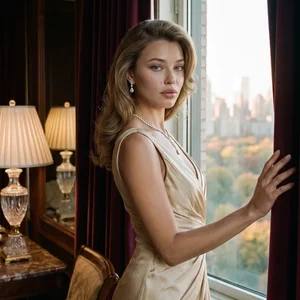
Use the uploaded reference photograph as the ONLY identity reference for the woman AND as the PRIMARY and STRICT visual reference for the entire photographic treatment. Create a highly realistic photograph of the exact same woman from the reference image. IDENTITY IS THE HIGHEST PRIORITY. Preserve her exact facial identity: same facial proportions, face shape, eyes, eyelids, eyebrows, nose, lips, jawline, cheek structure, skin tone, age, natural asymmetries and distinctive facial characteristics. She must remain unmistakably the same person. Do not beautify, idealize, reshape, rejuvenate or replace her with a generic model. FORMAT: Vertical 3:4 portrait, approximately waist-up. SCENE: An elegant Manhattan penthouse, circa 1984–1986. The woman stands beside a tall arched French window overlooking Central Park and the softly glowing Manhattan skyline in autumn. She turns slightly away from the window and looks back toward the camera with quiet confidence. Her expression is restrained and natural: relaxed lips, slightly lowered eyelids, a barely perceptible knowing smile, elegant self-possession and romantic mystery. One hand rests lightly against a deep burgundy velvet curtain or polished dark mahogany window frame. WARDROBE: Champagne-gold silk evening gown with softly draped construction, luxurious heavy silk-satin and authentic affluent mid-1980s American styling. Delicate diamond necklace with one teardrop pendant and understated diamond earrings. HAIR: Preserve her natural hair color. Authentic 1984–1986 soft glamorous blowout: voluminous but natural, side-swept, softly feathered waves, touchable texture, gentle crown volume. MAKEUP: Refined mid-1980s editorial makeup: warm taupe-brown eyes, subtle liner, defined lashes, softly shaped brows, peach-rose blush and muted rose-nude lips. Natural satin skin. No modern Instagram makeup or glass skin. INTERIOR: Old-money Manhattan circa 1985. Tall French windows, muted burgundy velvet curtains, dark mahogany, antique brass, marble, crystal lamps, pleated lampshades, antique mirrors, silk upholstery and understated period luxury. No modern furniture, modern electronics, LED lighting or contemporary design. MOST IMPORTANT — MATCH THE REFERENCE PHOTO AESTHETIC: The uploaded photograph is the absolute visual authority for: color grading, contrast, exposure, skin rendering, grain, softness, saturation, highlight behavior, shadow density and overall atmosphere. Do NOT reinterpret the reference as a modern cinematic grade. The final image must have the SAME analog photographic feeling as the reference: muted slightly faded colors, soft warm-neutral color balance, creamy beige and dusty peach skin tones, subdued champagne and faded rose, deep muted natural colors, low-to-moderate contrast, soft lifted blacks, gentle shadow detail, slightly faded highlights, subtle warm photographic haze, restrained saturation, and imperfect analog color density. Avoid strong amber/orange grading. The image should NOT look intensely golden. Warmth must remain subtle, creamy and slightly faded, exactly like the reference photograph. LIGHT: Soft, broad, diffused light similar in character to the uploaded reference. No dramatic spotlighting. No hard rim light. No strong modern cinematic contrast. Interior tungsten lamps may provide a gentle warm glow, but they must NOT overpower the reference photograph’s muted color palette. Window light should remain soft, hazy and diffused. FILM TEXTURE — CRITICAL: The film grain must be CLEARLY VISIBLE. Use authentic, irregular fine-to-medium 35mm color-negative grain across the entire photograph, especially visible in skin midtones, shadows, curtains, walls and defocused background areas. Do not make the image digitally clean. Do not smooth the grain away. The grain must be part of the photographic emulsion, not a subtle digital overlay. Use slightly reduced resolution and micro-contrast typical of a high-quality scanned 1980s color negative. Fine facial details should remain recognizable, but edges must never appear digitally razor-sharp. Add gentle optical diffusion, slight halation around bright areas and a subtle veil of analog softness. Highlights should bloom very slightly. Skin should retain real texture underneath the grain and diffusion. No digital sharpening. No clarity enhancement. No HDR. No ultra-HD appearance. No hyper-detailed pores. No plastic skin. No AI beauty smoothing. No perfectly clean gradients. No modern lens crispness. CAMERA: Vintage 35mm color-negative photography, circa 1985. 105mm portrait lens. Natural portrait compression. Shallow but believable depth of field. Soft optical focus falloff. Subtle vintage lens diffusion. The photograph should feel like a real 1980s color negative that was professionally scanned or printed, NOT a modern digital photograph with a vintage filter. FINAL LOOK: The woman, clothing and Manhattan interior are new, but the IMAGE ITSELF should look as though it belongs to the exact same photographic world as the uploaded reference. Same softness. Same muted color density. Same low contrast. Same creamy skin rendering. Same faded analog character. Same visible grain. Same gentle haze. Same restrained elegance. Same nostalgic atmosphere. Do not make it cleaner, sharper, richer, more saturated or more cinematic than the reference. If any stylistic instruction conflicts with the uploaded reference photograph, FOLLOW THE REFERENCE PHOTOGRAPH. Photorealistic. Authentic analog photography. Not CGI. Not illustration. Not modern digital photography. Aspect ratio 3:4 vertical.

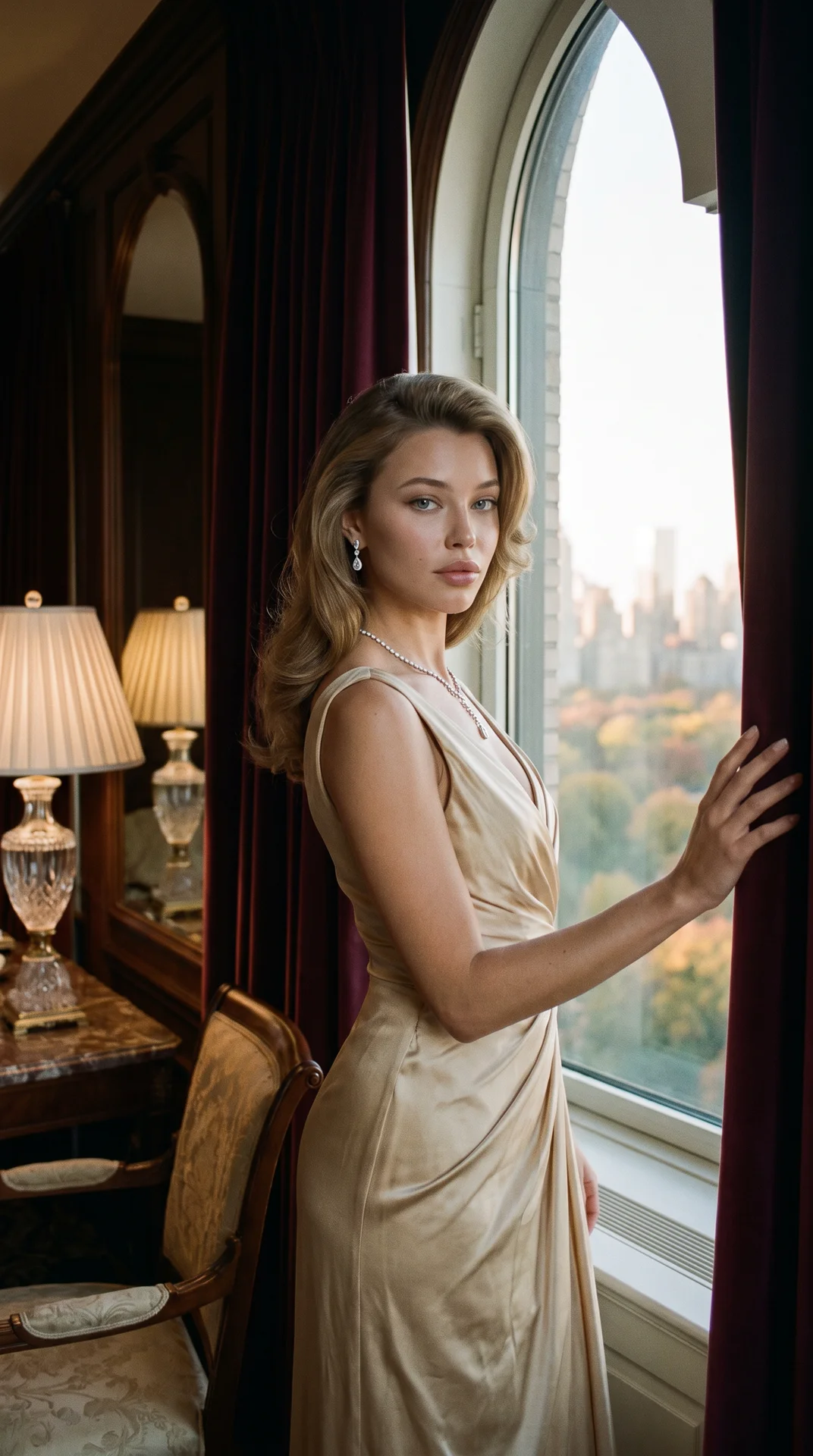
Use the uploaded reference photograph as the ONLY identity reference for the woman AND as the PRIMARY and STRICT visual reference for the entire photographic treatment. Create a highly realistic photograph of the exact same woman from the reference imag

Use the uploaded reference p…

Use the uploaded reference photograph as the ONLY identity reference for the woman AND as the PRIMARY and STRICT visual reference for the entire photographic treatment.


Create a highly realistic photograph of the exact same woman from the reference imag
Nano Banana PRO
ПРОМПТ

Use the uploaded reference photograph as the ONLY identity reference for the woman AND as the PRIMARY and STRICT visual reference for the entire photographic treatment. Create a highly realistic photograph of the exact same woman from the reference image. IDENTITY IS THE HIGHEST PRIORITY. Preserve her exact facial identity: same facial proportions, face shape, eyes, eyelids, eyebrows, nose, lips, jawline, cheek structure, skin tone, age, natural asymmetries and distinctive facial characteristics. She must remain unmistakably the same person. Do not beautify, idealize, reshape, rejuvenate or replace her with a generic model. FORMAT: Vertical 3:4 portrait, approximately waist-up. SCENE: An elegant Manhattan penthouse, circa 1984–1986. The woman stands beside a tall arched French window overlooking Central Park and the softly glowing Manhattan skyline in autumn. She turns slightly away from the window and looks back toward the camera with quiet confidence. Her expression is restrained and natural: relaxed lips, slightly lowered eyelids, a barely perceptible knowing smile, elegant self-possession and romantic mystery. One hand rests lightly against a deep burgundy velvet curtain or polished dark mahogany window frame. WARDROBE: Champagne-gold silk evening gown with softly draped construction, luxurious heavy silk-satin and authentic affluent mid-1980s American styling. Delicate diamond necklace with one teardrop pendant and understated diamond earrings. HAIR: Preserve her natural hair color. Authentic 1984–1986 soft glamorous blowout: voluminous but natural, side-swept, softly feathered waves, touchable texture, gentle crown volume. MAKEUP: Refined mid-1980s editorial makeup: warm taupe-brown eyes, subtle liner, defined lashes, softly shaped brows, peach-rose blush and muted rose-nude lips. Natural satin skin. No modern Instagram makeup or glass skin. INTERIOR: Old-money Manhattan circa 1985. Tall French windows, muted burgundy velvet curtains, dark mahogany, antique brass, marble, crystal lamps, pleated lampshades, antique mirrors, silk upholstery and understated period luxury. No modern furniture, modern electronics, LED lighting or contemporary design. MOST IMPORTANT — MATCH THE REFERENCE PHOTO AESTHETIC: The uploaded photograph is the absolute visual authority for: color grading, contrast, exposure, skin rendering, grain, softness, saturation, highlight behavior, shadow density and overall atmosphere. Do NOT reinterpret the reference as a modern cinematic grade. The final image must have the SAME analog photographic feeling as the reference: muted slightly faded colors, soft warm-neutral color balance, creamy beige and dusty peach skin tones, subdued champagne and faded rose, deep muted natural colors, low-to-moderate contrast, soft lifted blacks, gentle shadow detail, slightly faded highlights, subtle warm photographic haze, restrained saturation, and imperfect analog color density. Avoid strong amber/orange grading. The image should NOT look intensely golden. Warmth must remain subtle, creamy and slightly faded, exactly like the reference photograph. LIGHT: Soft, broad, diffused light similar in character to the uploaded reference. No dramatic spotlighting. No hard rim light. No strong modern cinematic contrast. Interior tungsten lamps may provide a gentle warm glow, but they must NOT overpower the reference photograph’s muted color palette. Window light should remain soft, hazy and diffused. FILM TEXTURE — CRITICAL: The film grain must be CLEARLY VISIBLE. Use authentic, irregular fine-to-medium 35mm color-negative grain across the entire photograph, especially visible in skin midtones, shadows, curtains, walls and defocused background areas. Do not make the image digitally clean. Do not smooth the grain away. The grain must be part of the photographic emulsion, not a subtle digital overlay. Use slightly reduced resolution and micro-contrast typical of a high-quality scanned 1980s color negative. Fine facial details should remain recognizable, but edges must never appear digitally razor-sharp. Add gentle optical diffusion, slight halation around bright areas and a subtle veil of analog softness. Highlights should bloom very slightly. Skin should retain real texture underneath the grain and diffusion. No digital sharpening. No clarity enhancement. No HDR. No ultra-HD appearance. No hyper-detailed pores. No plastic skin. No AI beauty smoothing. No perfectly clean gradients. No modern lens crispness. CAMERA: Vintage 35mm color-negative photography, circa 1985. 105mm portrait lens. Natural portrait compression. Shallow but believable depth of field. Soft optical focus falloff. Subtle vintage lens diffusion. The photograph should feel like a real 1980s color negative that was professionally scanned or printed, NOT a modern digital photograph with a vintage filter. FINAL LOOK: The woman, clothing and Manhattan interior are new, but the IMAGE ITSELF should look as though it belongs to the exact same photographic world as the uploaded reference. Same softness. Same muted color density. Same low contrast. Same creamy skin rendering. Same faded analog character. Same visible grain. Same gentle haze. Same restrained elegance. Same nostalgic atmosphere. Do not make it cleaner, sharper, richer, more saturated or more cinematic than the reference. If any stylistic instruction conflicts with the uploaded reference photograph, FOLLOW THE REFERENCE PHOTOGRAPH. Photorealistic. Authentic analog photography. Not CGI. Not illustration. Not modern digital photography. Aspect ratio 3:4 vertical.

UNISET

ИСТОРИЯ